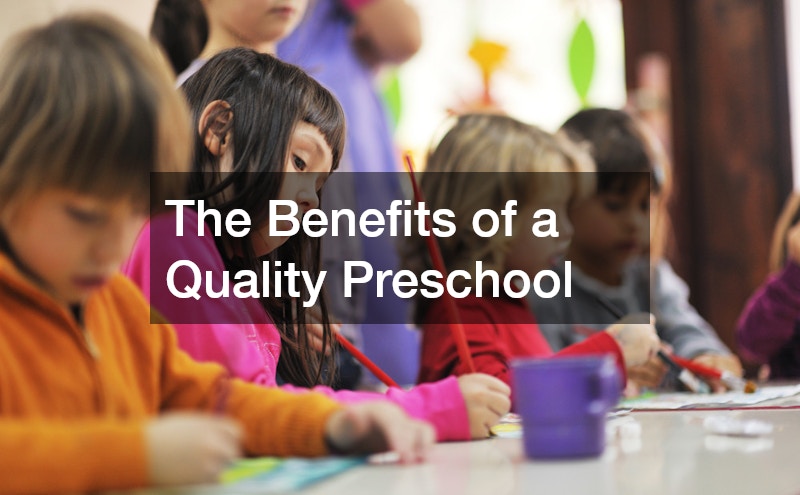
Quality preschools lay the groundwork for a child’s educational journey, setting the stage for future academic success. They emphasize the importance of early cognitive development, offering children the chance to explore and learn in a structured environment. This exposure not only strengthens their cognitive abilities but also their problem-solving and critical thinking skills, which are crucial in later stages of education. Additionally, quality preschools introduce basic concepts of literacy and numeracy at a young age, preparing children for the more structured curriculum of kindergarten. Engaging activities, such as storytelling and interactive games, also encourage a newfound love for learning.
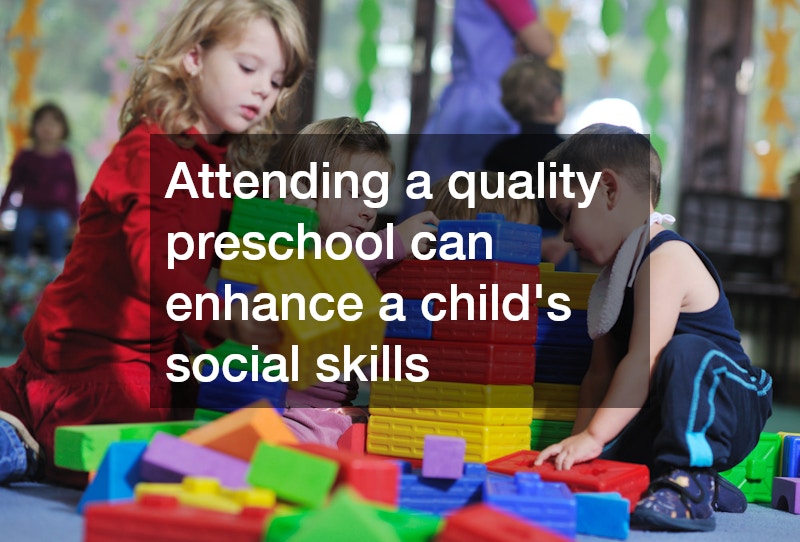
Attending a quality preschool can enhance a child’s social skills by providing opportunities to interact with peers in a controlled setting. Children learn to communicate effectively, take turns, share resources, and resolve conflicts amicably during their time in preschool. These social skills are essential not only for their educational journey but also for personal development as they grow. Furthermore, being exposed to diverse populations in private preschools introduces children to a variety of cultures and languages, fostering an appreciation and understanding of diversity from an early age. By cultivating a strong social awareness, preschools prepare children to become well-rounded individuals.
The emotional development of young children is also greatly supported in a preschool environment. Teachers are trained to recognize the emotional needs of their students and help them manage feelings like frustration or excitement. Through activities focused on collaboration and cooperation, children learn the value of teamwork and empathy. Preschools also provide a sense of routine and structure, which can be very reassuring for young children. This emotional support system aids in building self-confidence and independence, traits that are invaluable as children progress through their school years.
Cognitive and Language Development
Quality preschools emphasize cognitive growth by creating curriculums that promote active learning through play. These programs are designed to develop a child’s inquisitiveness and capacity for innovation. For instance, preschools might use building blocks to teach basic math concepts, encouraging children to recognize patterns and solve problems creatively. The hands-on experiences provided by quality preschools enhance the ability to make connections between ideas and concepts. This cognitive stimulation is crucial during the formative years and lays a strong foundation for future educational endeavors.
Language development is another key focus in quality preschools, where children are exposed to rich vocabularies and complex sentence structures. Through songs, rhymes, and stories, children acquire new words every day, enhancing their verbal skills. Interaction with teachers and classmates also teaches them how to communicate effectively and express their thoughts and emotions clearly. The presence of language-rich environments in private preschools contributes significantly to early literacy skills, such as phonics and vocabulary. As children become more comfortable with language, they develop the confidence to express themselves and engage in conversations with others.
Moreover, preschools provide an opportunity for bilingual language development through exposure to multiple languages. Many private preschools offer language classes that give children a head start in acquiring second languages. This exposure can significantly benefit a child’s brain development, particularly in areas associated with cognitive flexibility and memory retention. Bilingual children often show greater adaptability in changing circumstances and demonstrate superior problem-solving skills. Preschools thus play a vital role in shaping children into adept communicators, able to navigate both academic and social landscapes with ease.
The Role of Private Preschools
Private preschools often have resources that allow them to invest more in their educational programs, leading to potentially higher-quality education. These schools maintain lower student-to-teacher ratios, which enable personalized attention and customized learning experiences for each child. By tailoring instructions to fit the needs of individual students, teachers help optimize learning outcomes and foster a deep appreciation for knowledge. Furthermore, private preschools often have the flexibility to develop specialized curriculums that cater to niche interests or integrate technology into learning. This flexibility ensures that children are not only meeting standard educational goals but are also exploring their personal interests with enthusiasm.
Parental involvement is significant in private preschool settings, where collaboration between parents and teachers is encouraged. Various programs and events are designed to facilitate parent-teacher interactions, ensuring that both parties are aligned in supporting the child’s development. This active partnership allows for shared feedback, aiding the continuous improvement of educational strategies. Private preschools also promote community building, fostering a sense of belonging amongst families. Such connections create a supportive network that enhances a child’s learning and developmental environment.
Access to diverse extracurricular opportunities is another notable advantage of private preschools. These programs often include music, art, physical education, and other cultural activities, which contribute to a well-rounded education. Participating in such activities can help children discover new talents and interests, while also enhancing physical, social, and emotional development. Exposure to a wide array of experiences helps children develop advanced coordination skills and an appreciation for arts and culture. Consequently, private preschools provide a holistic approach to education, preparing children not only academically but also socially and emotionally for the future.